
LED Driver Thermal Derating: How Heat Cuts Output and Lifespan
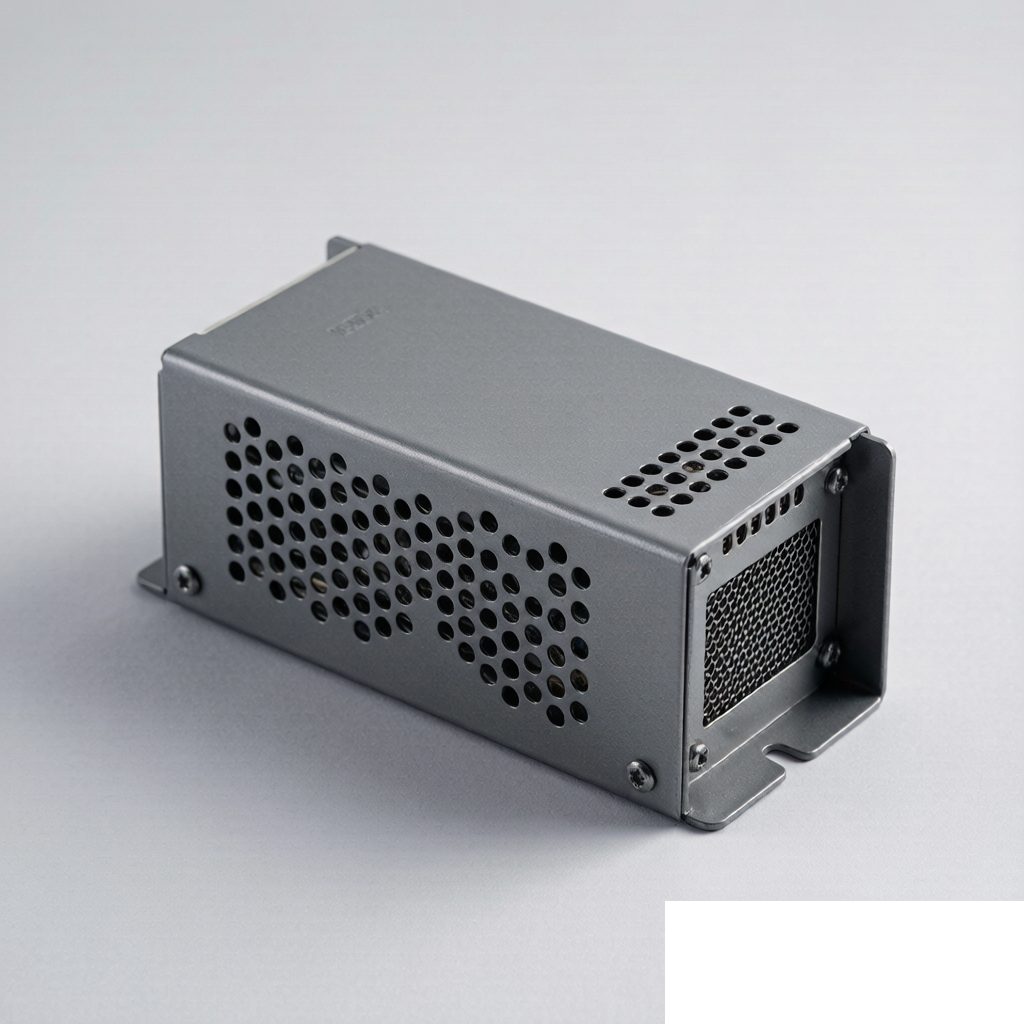
Every LED driver has a rated wattage printed on it — and almost every one of those figures assumes a comfortable room. Put the same driver in a sealed luminaire, a sun-baked cabinet or a tropical plant room and the usable power drops. This guide explains thermal derating: what it is, how to read it, and how to choose a driver that survives the heat you actually have.
Why heat is the real enemy
A switching power supply converts part of its input into heat, and that heat has nowhere to go but the case and the air around it. Inside, the parts that age first are the electrolytic capacitors: their lifetime halves for roughly every 10°C rise in internal temperature. Run a driver 20°C hotter than intended and you can cut its working life from 50,000 hours to under 15,000 — long before the LEDs themselves are due for replacement.
What "derating" actually means
Derating is the deliberate reduction of output power as ambient temperature rises, so the internal components stay within their thermal limits. A 200W driver rated at 40°C ambient may be able to deliver only about 160W at 55°C and perhaps 120W at 70°C. It is not a fault — it is the supply protecting itself. The mistake is to size a job on the headline wattage and then install it where it will never see 40°C.
Ambient vs case vs internal temperature
Three temperatures get confused, and only one of them is under your control:
| Temperature | What it is | Who controls it |
|---|---|---|
| Ambient (Ta) | Air around the driver | The installation — ventilation, sun, enclosure |
| Case (Tc) | Metal surface of the housing | Both — heat in, and how it escapes |
| Junction (Tj) | Inside the semiconductors | The driver design alone |
Data sheets usually quote a maximum case temperature (often 70–90°C) and an ambient range (for CHUGAO indoor drivers, −20 to +50°C). If you can measure the case with an infrared thermometer after an hour of running, you have the single most useful number for judging whether a driver is being cooked.
How to read a derating curve
A derating curve plots load (usually a percentage of rated output) against ambient temperature. It is flat up to the rated ambient, then slopes down. Read it at the temperature your driver will really see — not the average outdoor temperature, but the peak inside the enclosure on the hottest afternoon. If the curve is not published, ask for it; a supplier who cannot provide one is guessing.
Practical rules that prevent most failures
Four habits remove the great majority of heat-related failures we see in the field:
- Keep 20–30% headroom. Size the driver so it runs at 70–80% of its rated output at your expected ambient. This leaves margin for derating and for the extra draw of inrush. See how to size an LED power supply.
- Give it air. Mount with the ventilation slots free on both sides. Never bury a driver in insulation or pack it against a hot luminaire backplate.
- Mount for convection. Heat rises; a driver mounted on a vertical surface with free air above it runs cooler than one flat in a closed box. Metal enclosures help only if the metal can shed heat to cooler air.
- Don't stack loads. Two drivers in one small enclosure heat each other. Space them, or step up to one larger unit.
Waterproof drivers are not fireproof from heat
An IP67 unit is fully potted, which seals out water — but potting also traps heat. That is why waterproof drivers often derate at a lower ambient (or from a lower base) than an open indoor driver of the same wattage. Outdoor installs in hot, sunny climates need more headroom, not less. The same logic applies to the vented IP65 rainproof line: it breathes, so it stays cooler, but it is not for total immersion.
Specifying for a hot or enclosed site
If you are buying for the Gulf, South-East Asia, a plant room, a glazed atrium or any sealed fixture, tell us three things: the peak ambient inside the enclosure, the total load, and how the driver will be mounted. We will size for the derated figure rather than the headline wattage, and where needed recommend a higher-rated unit so it runs comfortably at 70% instead of being pushed at 100%. That single decision is usually the difference between a three-year warranty that is never claimed and a driver that fails in the first summer.
Heat is the slowest, quietest failure mode in LED lighting — and the easiest to design out. Match the driver to the temperature it will actually live in, and it will outlast the fixture.
Sizing for a hot or sealed enclosure?
Send the peak ambient temperature inside the enclosure, the total load and how the driver will be mounted. We will size to the derated figure, not the headline wattage.
Get a derated recommendation